Why did Moses asked for God’s name?
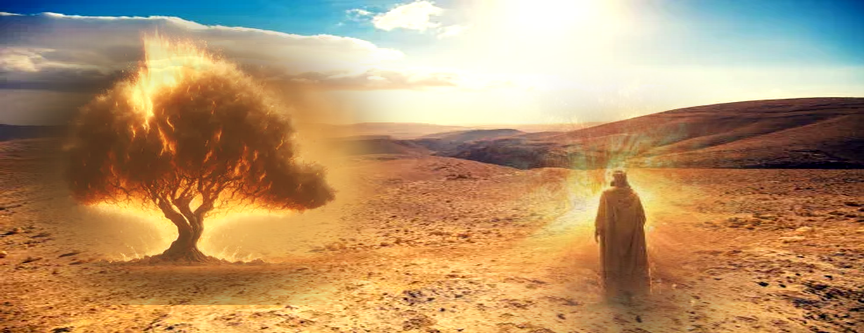 Historical background :
During the era of Moses, the historical background of the ancient Levant was dominated by Canaanite polytheism. Although there was only one unified Canaanite pantheon, but it contained over 234 named deities. Functionally, this pantheon operated as a single divine family or council rather than separate, competing pantheons.
Historians categorize this massive divine family into a specific hierarchy:
The Heads of the Pantheon: The supreme creator god El (the patriarch) and his consort Asherah (the matriarch, mother of 70 gods).
The Active Rulers: Baal (the powerful storm god and lord of rain/fertility), alongside war goddesses like Anat and Astarte.
Forces of Chaos: Yam (god of the sea) and Mot (god of death and the underworld).
In Egypt:
Ancient Egypt had a massive pantheon of over 1,500 to 2,000 different deities, as their religion was highly polytheistic. The exact number fluctuated over their 3,000-year history, with major state deities like Amun-Ra coexisting with hundreds of local, regional, and household gods. According to biblical tradition, the Ten Plagues were viewed as a direct confrontation between Yahweh and the Egyptian pantheon, serving to demonstrate the God of Israel’s supremacy over these specific deities: The Nile turning to blood: Addressed to Hapi (god of the Nile’s flooding) and Khnum (guardian of the Nile).Plague of frogs: Addressed to Heqet (goddess of fertility and childbirth, depicted with a frog’s head).Plague of darkness: A direct defeat of Ra, the prominent sun god.Plague of the firstborn: A judgment against the Pharoah himself, who was worshipped as a living god (a manifestation of Horus).You can explore more about the documented deities in this World History Encyclopedia overview, or review the breakdown of the 10 Egyptian Gods frequently associated with the plagues in the Exodus narrative. Ten Egyptian Plagues For Ten Egyptian Gods and Goddesses.
The Israelites initially emerged from this polytheistic context rather than practicing strict monotheism
The significance of “Names:”
In English and many other Western languages, names function primarily as arbitrary labels used to identify someone. Phrases like “what’s your name” act simply as a social convention. In Hebrew, however, a name is never just a sound. Rooted in ancient tradition, a Hebrew name is a word connected to the language’s root system, holding literal meaning, reflecting a person’s character, and serving as a link to destiny.
Examples:
Moses – drawn out of water
Jabes – borne in pain
Joshua – God is deliverance
Jacob – heel grabber Israel – one who struggle with God
Aaron – mountain of strength
Esau – hairy, rough –textured
Daniel – God is my judge
Michael – who is like God
So when Moses asked :
“ Exodus 3: 13 Then Moses said to God, “If I come to the people of Israel and say to them, ‘The God of your fathers has sent me to you,’ and they ask me, ‘What is his name?’ what shall I say to them?” 14 God said to Moses, “I am who I am.” And he said, “Say this to the people of Israel: ‘I am has sent me to you.’” 15 God also said to Moses, “Say this to the people of Israel: ‘The Lord, the God of your fathers, the God of Abraham, the God of Isaac, and the God of Jacob, has sent me to you.’ This is my name forever, and thus I am to be remembered throughout all generations.”
אֶהְיֶה אֲשֶׁר אֶהְיֶה (Ehyeh Asher Ehyeh), which is often translated as “I Am That I Am” but can also mean “I Will Be What I Will Be” or “I Am What I Am”
I AM THAT I AM is a profound phrase in that signifies God’s self-revelation to Moses, underscoring His eternal and self-existent nature. This phrase embodies the essence of God’s name, Jehovah, highlighting His unchanging existence.
What to be careful
The name “I AM” (given to Moses in Exodus 3:14) emphasizes God’s absolute, unchanging divinity. To avoid any confusion that you are sharing in His divine nature or equating yourself to God, it is best to avoid using “I AM” for yourself in a standalone way.
Recent Comments